
More Information
Submitted: June 18, 2024 | Approved: July 01, 2024 | Published: July 02, 2024
How to cite this article: Tsygankova VA, Andrusevich YaV, Vasylenko NM, Kopich VM, Solomyannyi RM, et al. The Use of Thioxopyrimidine Derivatives as New Regulators of Growth and Photosynthesis of Barley. J Plant Sci Phytopathol. 2024; 8: 090-099.
DOI: 10.29328/journal.jpsp.1001139
Copyright License: © 2024 Tsygankova VA, et al. This is an open access article distributed under the Creative Commons Attribution License, which permits unrestricted use, distribution, and reproduction in any medium, provided the original work is properly cited.
Keywords: Hordeum vulgare L.; IAA; Methyur; Kamethur; Ivin; Thioxopyrimidine derivatives

The Use of Thioxopyrimidine Derivatives as New Regulators of Growth and Photosynthesis of Barley
Tsygankova VA*, Andrusevich YaV, Vasylenko NM, Kopich VM, Solomyannyi RM, Popilnichenko SV, Kozachenko OP, Pilyo SG and Brovarets VS
Department for Chemistry of Bioactive Nitrogen-Containing Heterocyclic Compounds, V.P. Kukhar Institute of Bioorganic Chemistry and Petrochemistry, National Academy of Sciences of Ukraine, 1, Academician Kukhar str., 02094, Kyiv-94, Ukraine
*Address for Correspondence: Tsygankova VA, Dr. of Biological Sciences, Principal researcher, Senior Staff Scientist, Department for Chemistry of Bioactive Nitrogen-Containing Heterocyclic Compounds, V.P. Kukhar Institute of Bioorganic Chemistry and Petrochemistry, National Academy of Sciences of Ukraine, 1, Academician Kukhar str., 02094, Kyiv-94, Ukraine, Email: [email protected]
New synthetic compounds - thioxopyrimidine derivatives as regulators of vegetative growth and photosynthesis of spring barley (Hordeum vulgare L.) variety Acordine were studied. The growth-regulatory effect of new synthetic compounds, thioxopyrimidine derivatives, used in a concentration of 10-6M, was compared with the growth-regulatory effect of a plant hormone auxin IAA (1H-indol-3-yl)acetic acid) or synthetic plant growth regulators, derivatives of sodium and potassium salts of 6-methyl-2-mercapto-4-hydroxypyrimidine (Methyur, Kamethur), N-oxide-2,6-dimethylpyridine (Ivin), used in a similar concentration of 10-6M. The conducted study showed the similarity of the growth-regulatory effects of synthetic compounds, thioxopyrimidine derivatives, the plant hormone auxin IAA, and synthetic plant growth regulators Methyur, Kamethur, and Ivin. Morphometric parameters (average length of shoots (mm), average length of roots (mm), and average biomass of 10 plants (g)) and biochemical parameters (content of photosynthetic pigments chlorophylls a, b, a+b and carotenoids (µg/ml)) of barley plants treated with the plant hormone auxin IAA or synthetic plant growth regulators Methyur, Kamethur, Ivin or thioxopyrimidine derivatives were increased after 4 weeks compared to control plants. The dependence of the growth-regulatory effect of synthetic compounds, thioxopyrimidine derivatives on their chemical structure was analyzed. The use of the synthetic plant growth regulators, derivatives of sodium salt of 6-methyl-2-mercapto-4-hydroxypyrimidine (Methyur), potassium salt of 6-methyl-2-mercapto-4-hydroxypyrimidine (Kamethur), N-oxide-2,6-dimethylpyridine (Ivin) and selected most active synthetic compounds, thioxopyrimidine derivatives for regulating the growth and photosynthesis of spring barley (Hordeum vulgare L.) variety Acordine is proposed.
Barley (Hordeum vulgare L.) is one of the most important cereal crops [1-3]. The negative impact of global climate change, soil salinization and contamination with industrial waste, and the spread of phytopathogens lead to a decrease in yields and adaptation to stress factors of barley and other cereal crops [4-8].
Currently, the agricultural industry uses known natural plant hormones such as gibberellic acid (GA) and cytokinin (6-Benzyladenine) to manipulate the development and flowering time of barley, or synthetic plant growth regulators, such as chlormequat chloride (chlormequat), trinexapac-ethyl (trinexapac), and ethephon to increase barley yield and crop quality [9–11]. In plant biotechnology, for obtaining in vitro new lines of barley plants with improved morphogenetic potential, natural auxin, such as IAA (1H-indol-3-ylacetic acid) or synthetic physiological analogues of auxin: 2,4-D(2,4-dichlorphenoxyacetic acid), NAA (naphthalene-1-acetic acid), TA-12 (1-[2-chloroethoxycarbonyl-methyl]-4-naphthalenesulfonic acid calcium salt) and TA-14 (1-[2-dimethylaminoethoxicarbonylmethyl]naphtalene chlormethylate) are used for microclonal propagation of barley [12,13]. However, the development of new effective and environmentally friendly growth regulators for barley plants is a very urgent problem.
Today, it is proposed to use new synthetic compounds, derivatives of pyrimidine, which have a regulatory effect similar to plant hormones on the growth of plant roots and shoots, as new plant growth regulators, pesticides, and fungicides [14-17]. The best known of these compounds are new environmentally friendly synthetic plant growth regulators, derivatives of sodium and potassium salts of 6-methyl-2-mercapto-4-hydroxypyrimidine (Methyur and Kamethur), N-oxide-2,6-dimethylpyridine (Ivin), which when used alone or in combination with mineral fertilizers, significantly contribute to the germination of plant seeds, activate plant growth during the vegetative stage, increase crop yield and plant adaptation to abiotic stress factors [18-21].
New synthetic compounds, pyrimidine derivatives that regulate plant growth are also being created and studied in barley and other crops such as maize, wheat, pea, tomato, chickpea, oilseed rape, haricot bean, and pumpkin [22-31]. It has been shown that new synthetic compounds, pyrimidine derivatives are capable of exerting physiological effects similar to plant hormones auxins and cytokinins or the synthetic plant growth regulators, derivatives of sodium and potassium salts of 6-methyl-2-mercapto-4-hydroxypyrimidine (Methyur and Kamethur), improving seed germination, the formation and growth of shoots, roots and flowers of plants, enhancing photosynthetic processes in plant leaves [22-31]. Due to the physiological effects of these new synthetic compounds, pyrimidine derivatives can be used in the agricultural industry as auxin-like and cytokinin-like substances that regulate plant growth.
The use of environmentally friendly plant growth regulators based on synthetic compounds, pyrimidine derivatives in low, non-toxic concentrations for human and animal health from 10-5M to 10-9M allows for reducing the use of pesticides and fungicides that are toxic to humans and animals [32-35], which has a significant economic effect on agricultural industry and helps solve environmental problems.
The aim of this work is to study the regulatory effect of new synthetic compounds, thioxopyrimidine derivatives on the vegetative growth and photosynthesis of an important cereal crop - spring barley (Hordeum vulgare L.) variety Acordine.
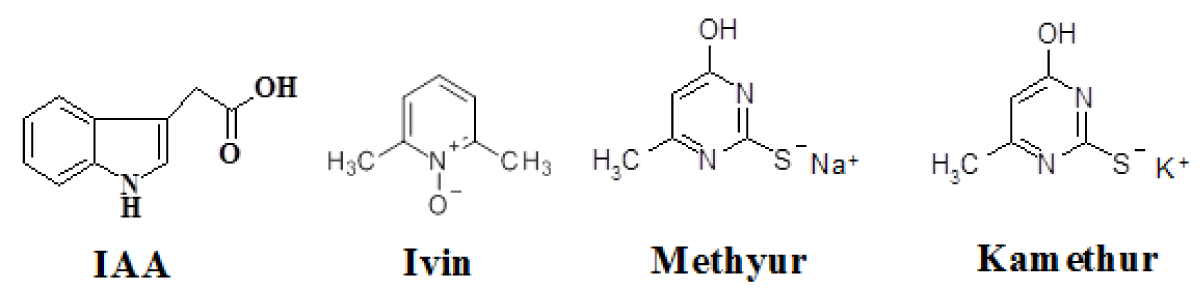
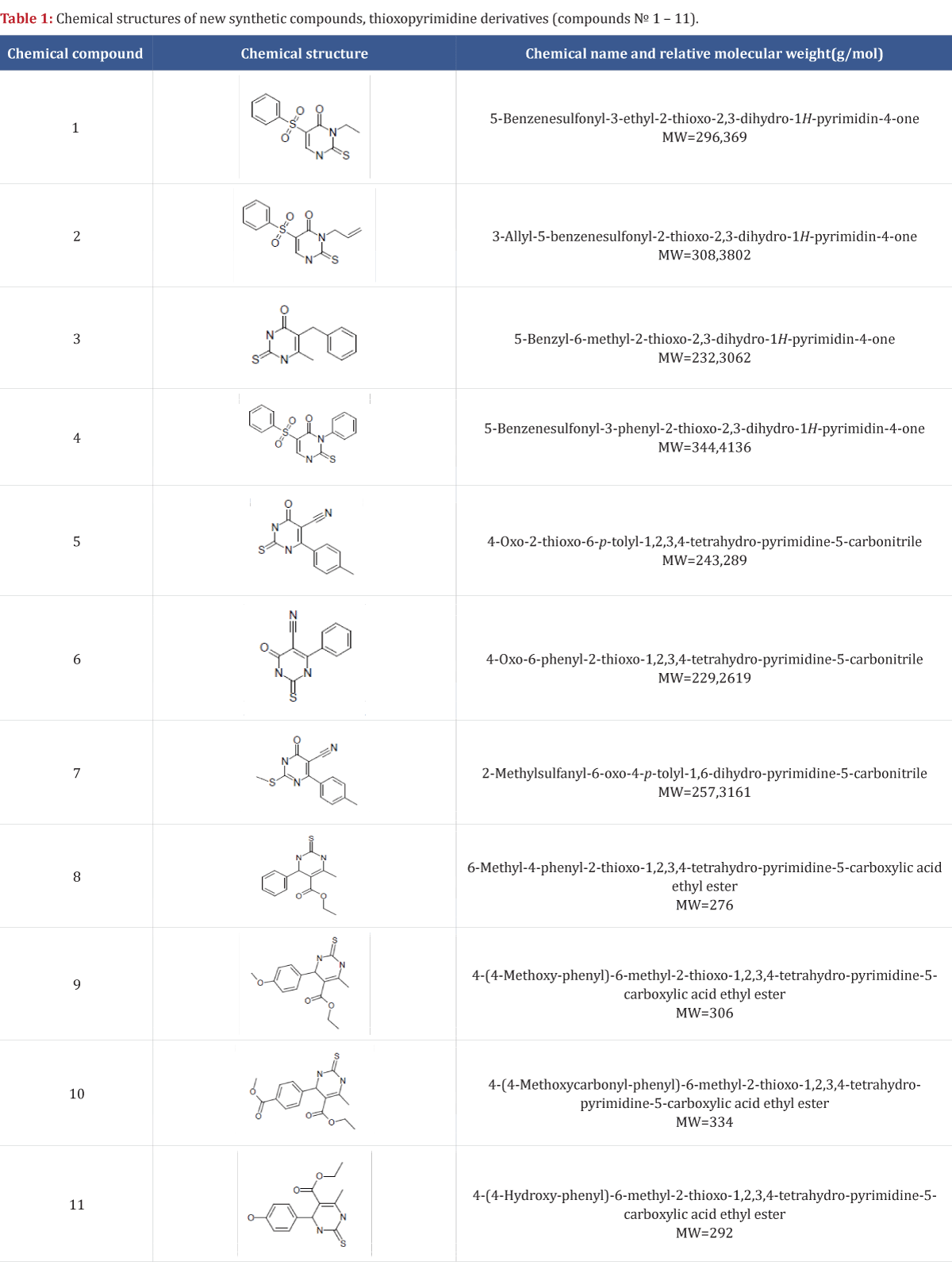
The chemical structures of auxin IAA (1H-indol-3-yl)acetic acid) manufactured by Sigma-Aldrich, USA, synthetic plant growth regulators, derivatives of sodium and potassium salts of 6-methyl-2-mercapto-4-hydroxypyrimidine (Methyur, Kamethur), N-oxide-2,6-dimethylpyridine (Ivin) and chemical compounds, thioxopyrimidine derivatives, synthesized at the Department for Chemistry of Bioactive Nitrogen-Containing Heterocyclic Compounds, V.P. Kukhar Institute of Bioorganic Chemistry and Petrochemistry of the National Academy of Sciences of Ukraine, are illustrated in Figure 1 and Table 1.
Download Image
Figure 1: Chemical structures of the plant hormone auxin IAA (1H-indol-3-yl)acetic acid), MW=175,19, synthetic plant growth regulators, derivatives of N-oxide-2,6-dimethylpyridine (Ivin), MW=125,17, sodium salt of 6-methyl-2-mercapto-4-hydroxypyrimidine (Methyur), MW = 165,17, potassium salt of 6-methyl-2-mercapto-4-hydroxypyrimidine (Kamethur), MW = 181,28.
Download Image
Table 1: Chemical structures of new synthetic compounds, thioxopyrimidine derivatives (compounds № 1 – 11).
To study the regulatory effect of new synthetic compounds, thioxopyrimidine derivatives on the vegetative growth of spring barley (Hordeum vulgare L.) variety Acordine, seeds were sterilized with 1% KMnO4 solution for 15 min, then treated with 96% ethanol solution for 1 min, after which they were washed three times with sterile distilled water. After this procedure, barley seeds were placed in the plastic cuvettes (each containing 20-25 seeds) on the perlite moistened with distilled water (control sample), or water solutions of auxin IAA (1H-indol-3-yl)acetic acid), or synthetic plant growth regulators, derivatives of sodium and potassium salts of 6-methyl-2-mercapto-4-hydroxypyrimidine (Methyur,
Kamethur), N-oxide-2,6-dimethylpyridine (Ivin), or synthetic compounds, thioxopyrimidine derivatives, used at a concentration of 10-6 M (experimental samples). Then the barley seeds were placed in a thermostat for germination in the dark at a temperature of 20-22 °C. After 48 hours, barley seedlings were placed in a climate chamber, where they were grown at 16/8 h light/dark conditions, at a temperature of 20-22 °C, light intensity of 3000 lux, and air humidity of 60%-80%. Morphometric parameters of barley plants (average length of shoots (mm), average length of roots (mm), and average biomass of 10 plants (g)) were measured after 4 weeks according to methodological recommendations [36].
Morphometric parameters determined on experimental barley plants, in comparison with similar parameters determined on control barley plants, were expressed as %.
Biochemical parameters of barley plants (content of photosynthetic pigments (µg/ml)) were also measured after 4 weeks according to methodological recommendations [37,38]. To perform the extraction of photosynthetic pigments, we homogenized a sample (500 mg) of barley leaves in the porcelain mortar, cooled at the temperature of 10 °С 96% ethanol at the ratio of 1: 10 (weight: volume) with the addition of 0,1-0,2 g CaCO3 (to neutralize the plant acids). The 1 ml of obtained homogenate was centrifuged at 8000 g in a refrigerated centrifuge K24D (MLW, Engelsdorf, Germany) for 5 min at the temperature of 4 °С. The obtained precipitate was washed three times, with 1 ml 96% ethanol, and centrifuged at the above-mentioned conditions. After this procedure, the optical density of chlorophyll a, chlorophyll b, and carotenoid in the obtained extract was measured using a spectrophotometer Specord M-40 (Carl Zeiss, Germany).
The content of chlorophyll a, chlorophyll b, and carotenoids in barley leaves was calculated in accordance with the formula:
Cchl a = 13.36×A664.2 – 5.19×A648.6,
Cchl b = 27.43×A648.6 – 8.12A×664.2,
Cchl (a + b) = 5.24×A664.2 + 22.24×A648.6,
Ccar = (1000×A470 – 2.13×Cchl a – 97.64×Cchlb)/209,
Where,
Cchl – concentration of chlorophylls (µg/ml), Cchl a – concentration of chlorophyll a (µg/ml), Cchl b – concentration of chlorophyll b (µg/ml), Ccar – concentration of carotenoids (µg/ml), А – absorbance value at a proper wavelength in nm.
The chlorophyll and carotenoids content per 1 g of Fresh Weight (FW) extracted from barley leaves was calculated by the following formula (separately for chlorophyll a, chlorophyll b, and carotenoids):
A1= (C×V)/(1000×a1),
Where, A1 – content of chlorophyll a, chlorophyll b, or carotenoids (mg/g FW),
C - Concentration of pigments (µg/ml),
V - Volume of extract (ml),
a1 - sample of barley leaves (g).
Biochemical parameters determined on experimental barley plants, in comparison with similar parameters determined on control barley plants, were expressed as %.
Statistical data analysis
Each experiment was performed three times. Statistical processing of the experimental data was carried out using Student’s t-test with a significance level of p ≤ 0.05; mean values ± standard deviation (± SD) [39].
Regulatory effect of thioxopyrimidine derivatives on morphometric parameters of barley
It is known, that plant hormones auxins and cytokinins play a key role in controlling seed germination and subsequent growth of plant roots and shoots [40-42]. In this work, the regulatory effect of new synthetic compounds, thioxopyrimidine derivatives (compounds № 1 – 11, Table 1) in comparison with the regulatory effect of plant hormone auxin IAA, or synthetic plant growth regulators, derivatives of 6-methyl-2-mercapto-4-hydroxypyrimidine (Methyur, Kamethur), N-oxide-2,6-dimethylpyridine (Ivin) (Figure 1) on the vegetative growth of spring barley (Hordeum vulgare L.) variety Acordine was studied.
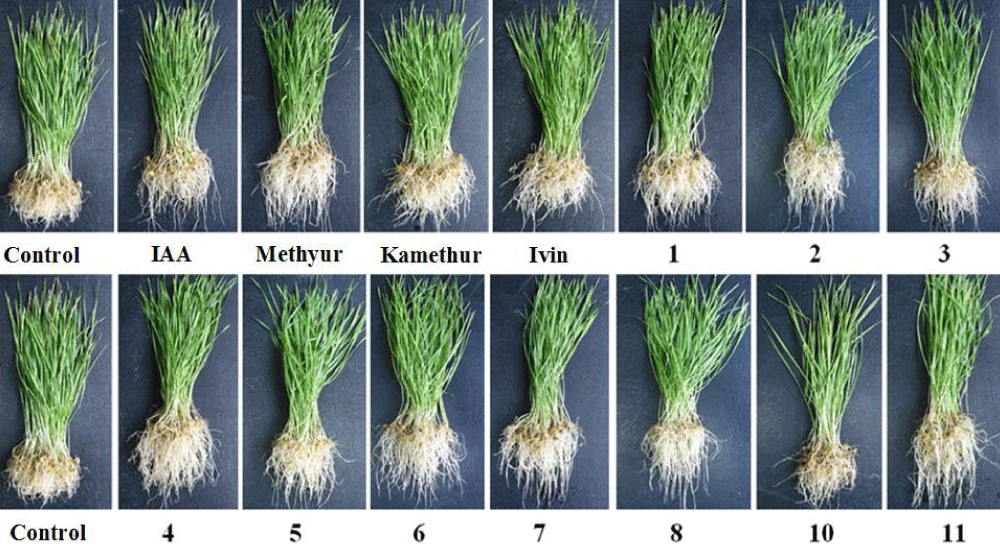
It was found that synthetic compounds, thioxopyrimidine derivatives, show a similar or higher regulatory effect on the growth of shoots and roots of barley plants for 4 weeks than the effect of plant hormone auxin IAA, or synthetic plant growth regulators, derivatives of sodium and potassium salts of 6-methyl-2-mercapto-4-hydroxypyrimidine (Methyur, Kamethur), N-oxide-2,6-dimethylpyridine (Ivin) (Figure 2).
Download Image
Figure 2: The regulatory effect of plant hormone auxin IAA, synthetic plant growth regulators, derivatives of sodium and potassium salts of 6-methyl-2-mercapto-4-hydroxypyrimidine (Methyur, Kamethur), N-oxide-2,6-dimethylpyridine (Ivin) and synthetic compounds, thioxopyrimidine derivatives (compounds № 1 – 11) at a concentration of 10-6M on the growth of shoots and roots of 4-week-old spring barley (Hordeum vulgare L.) variety Acordine compared to control plants.
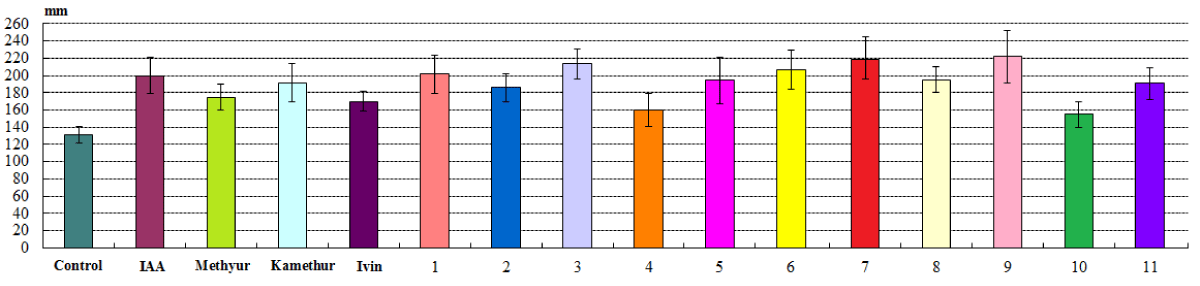
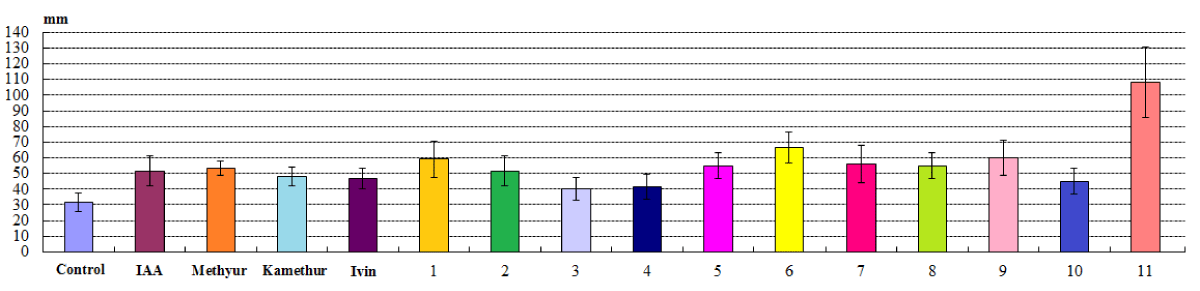
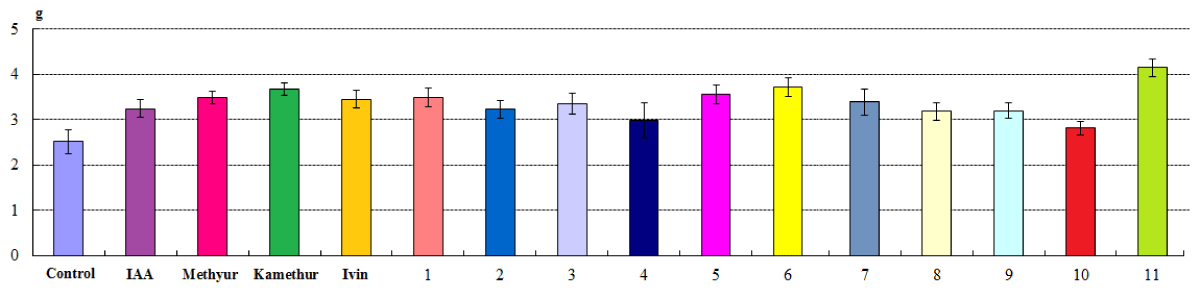
Morphometric parameters of barley plants (average length of shoots (mm), average length of roots (mm), and average biomass of 10 plants (g)) treated with synthetic compounds, thioxopyrimidine derivatives in a concentration of 10-6M, significantly increased as compared to control barley plants treated with distilled water (Figure 3 – Figure 5).
Download Image
Figure 3: The regulatory effect of plant hormone auxin IAA, synthetic plant growth regulators, derivatives of sodium and potassium salts of 6-methyl-2-mercapto-4-hydroxypyrimidine (Methyur, Kamethur), N-oxide-2,6-dimethylpyridine (Ivin) and synthetic compounds, thioxopyrimidine derivatives (compounds № 1 – 11) at a concentration of 10-6M on the average length of shoots (mm) of 4-week-old spring barley (Hordeum vulgare L.) variety Acordine compared to control plants.
Download Image
Figure 4: The regulatory effect of plant hormone auxin IAA, synthetic plant growth regulators, derivatives of sodium and potassium salts of 6-methyl-2-mercapto-4-hydroxypyrimidine (Methyur, Kamethur), N-oxide-2,6-dimethylpyridine (Ivin) and synthetic compounds, thioxopyrimidine derivatives (compounds № 1 – 11) at a concentration of 10-6M on the average length of roots (mm) of 4-week-old spring barley (Hordeum vulgare L.) variety Acordine compared to control plants.
Download Image
Figure 5: The regulatory effect of plant hormone auxin IAA, synthetic plant growth regulators, derivatives of sodium and potassium salts of 6-methyl-2-mercapto-4-hydroxypyrimidine (Methyur, Kamethur), N-oxide-2,6-dimethylpyridine (Ivin) and synthetic compounds, thioxopyrimidine derivatives (compounds № 1 – 11) at a concentration of 10-6M on the average biomass of 10 plants (g) of 4-week-old spring barley (Hordeum vulgare L.) variety Acordine compared to control plants.
Synthetic compounds, thioxopyrimidine derivatives № 1–3, 5–9, and 11 showed the highest regulatory effect on the parameters of shoots (mm) of 4-week-old spring barley (Hordeum vulgare L.) variety Acordine, and the least – compounds № 4 and 10. The average length of shoots (mm) increased: in plants treated with compounds № 1–3, 5–9, and 11 - by 41,39–68,35%, and in plants treated with compounds № 4 and 10 - by 17,72–21,52%, according to the control plants (Figure 3).
Auxin IAA, Methyur, Kamethur, and Ivin also showed the highest regulatory effect, the average length of shoots (mm) increased: in plants treated with auxin IAA - by 51,9%, in plants treated with Methyur - by 32,91%, in plants treated with Kamethur - by 45,57%, and in plants treated with Ivin - by 28,86%, according to the control plants (Figure 3).
Synthetic compounds, thioxopyrimidine derivatives № 1, 2, 5–9, and 11 showed the highest regulatory effect on the parameters of roots (mm) of 4-week-old spring barley (Hordeum vulgare L.) variety Acordine, and the least – compounds № 3, 4 and 10. The average length of shoots (mm) increased: in plants treated with compounds № 1, 2, 5–9 and 11 - by 63,16–242,11%, and in plants treated with compounds № 3, 4 and 10 - by 26,32–42,11%, according to the control plants (Figure 4).
Auxin IAA, Methyur, Kamethur, and Ivin also showed the highest regulatory effect, the average length of roots (mm) increased: in plants treated with auxin IAA - by 63,16%, in plants treated with Methyur - by 68,39%, in plants treated with Kamethur - by 52,63%, and in plants treated with Ivin - by 47,37%, according to the control plants (Figure 4).
Synthetic compounds, thioxopyrimidine derivatives № 1-3, 5–9, and 11 showed the highest regulatory effect on the parameters of average biomass of 10 plants (g) of 4-week-old spring barley (Hordeum vulgare L.) variety Acordine, and the least – compounds № 4 and 10. The average biomass of 10 plants (g) increased: in plants treated with compounds № 1-3, 5–9 and 11 - by 26,49–64,9%, and in plants treated with compounds № 4 and 10 - by 11,92–18,54%, according to the control plants (Figure 5).
Auxin IAA, Methyur, Kamethur, and Ivin also showed the highest regulatory effect, the average biomass of 10 plants (g) increased: in plants treated with auxin IAA - by 29,14%, in plants treated with Methyur - by 38,41%, in plants treated with Kamethur - by 46,36%, and in plants treated with Ivin - by 37,1%, according to the control plants (Figure 5).
Summarizing the obtained data, it should be noted that synthetic compounds, thioxopyrimidine derivatives № 1–3, 5–9, and 11 showed the highest regulatory effect on the parameters of average shoot length (mm), average root length (mm), and average biomass (g) of 10 barley plants.
The regulatory effect of these synthetic compounds, applied at a concentration of 10-6 M, was similar to or exceeded the regulatory effect of plant hormone auxin IAA or synthetic plant growth regulators, derivatives of sodium and potassium salts of 6-methyl-2-mercapto-4-hydroxypyrimidine (Methyur, Kamethur), N-oxide-2,6-dimethylpyridine (Ivin) applied at a similar concentration of 10-6 M.
Obviously, this fact can be explained by the auxin-like and cytokinin-like regulatory effects [40-42] of synthetic compounds, thioxopyrimidine derivatives № 1–3, 5–9, and 11 on the proliferation and differentiation of plant cells, which are the main processes of seed germination, growth, and development of shoots and roots of spring barley (Hordeum vulgare L.) variety Acordine.
Regulatory effect of thioxopyrimidine derivatives on biochemical parameters of barley
As is known, photosynthetic pigments play a key role in photosynthesis and photoprotection of plants and ensure their productivity [37,38,43]. Among plant pigments, the most biologically active compounds are α-carotene, β-carotene, β-cryptoxanthin, lutein, zeaxanthin, and lycopene, which are used as therapeutic agents for the prevention and treatment of various human diseases [44,45]. Plant hormones cytokinins play an important role in the biosynthesis of photosynthetic pigments and in slowing down the degradation of chlorophylls and carotenoids in plant cells [46-49].
In this work, the regulatory effect of new synthetic compounds, thioxopyrimidine derivatives (compounds № 1 – 11, Table 1) was investigated in comparison with the regulatory effect of plant hormone auxin IAA, or synthetic plant growth regulators, derivatives of 6-methyl-2-mercapto-4-hydroxypyrimidine (Methyur, Kamethur), N-oxide-2,6-dimethylpyridine (Ivin) (Figure 1) on the content of photosynthetic pigments in the leaves of spring barley (Hordeum vulgare L.) variety Acordine.
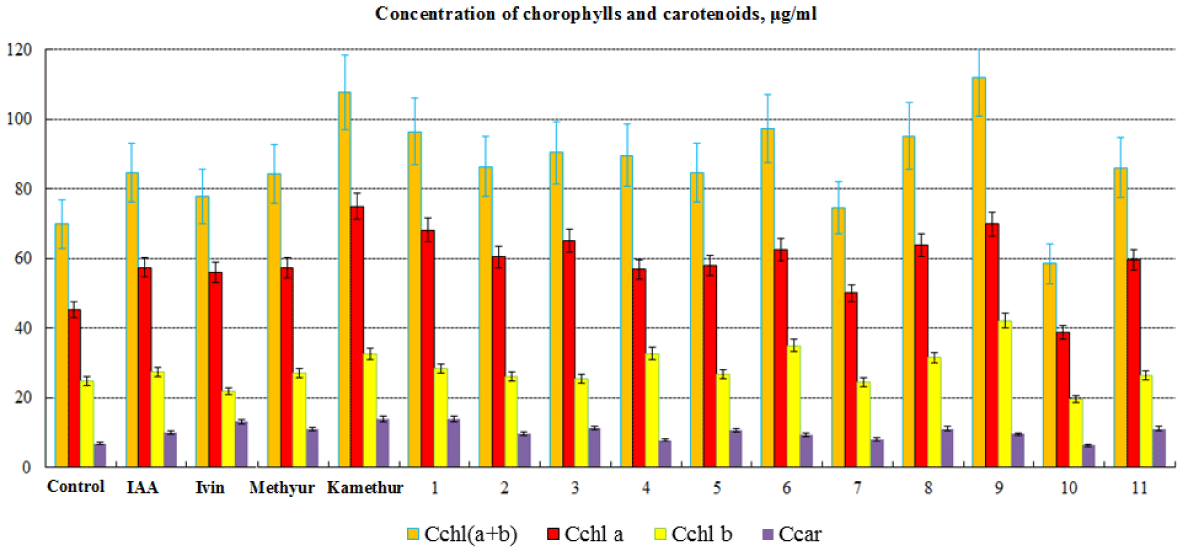
The conducted study showed that the synthetic plant growth regulator, a derivative of the potassium salt of 6-methyl-2-mercapto-4-hydroxypyrimidine (Kamethur) revealed the highest regulatory effect. The biochemical parameters (content of chlorophyll a, chlorophyll b, chlorophylls a+b, and carotenoids (µg/ml)) in the leaves of the 4-week-old spring barley (Hordeum vulgare L.) variety Acordine treated with Kamethur exceeded the biochemical parameters of the control barley plants: chlorophyll a increased by 65,72%, chlorophyll b increased by 32,027%, chlorophylls a+b increased by 53,81%, carotenoids increased by 103,72%, respectively (Figure 6).
Download Image
Figure 6: The regulatory effect of plant hormone auxin IAA, synthetic plant growth regulators, derivatives of sodium and potassium salts of 6-methyl-2-mercapto-4-hydroxypyrimidine (Methyur, Kamethur), N-oxide-2,6-dimethylpyridine (Ivin) and synthetic compounds, thioxopyrimidine derivatives (compounds № 1 – 11) at a concentration of 10-6M on the content of chlorophylls a, b, a+b and carotenoids (µg/ml) in the leaves of 4-week-old spring barley (Hordeum vulgare L.) variety Acordine compared to control plants.
The regulatory effect of plant hormone auxin IAA and synthetic plant growth regulators, derivatives of the sodium salt of 6-methyl-2-mercapto-4-hydroxypyrimidine (Methyur) and N-oxide-2,6-dimethylpyridine (Ivin) was somewhat lower. The biochemical parameters (the content of chlorophyll a, chlorophyll b, chlorophylls a+b, and carotenoids (µg/ml)) in the leaves of the 4-week-old spring barley (Hordeum vulgare L.) variety Acordine treated with Methyur and Ivin exceeded the biochemical parameters of the control barley plants: chlorophyll a increased by 23,68-26,9%, chlorophyll b increased by 9,57-10,35%, chlorophylls a+b increased by 11,21-21,05%, carotenoids increased by 44,63-91,99%, respectively (Figure 6).
The regulatory effect of synthetic compounds, thioxopyrimidine derivatives № 1–6, 8, 9, and 11, was similar or exceeded the regulatory effect of plant hormone auxin IAA or synthetic plant growth regulators, derivatives of sodium and potassium salts of 6-methyl-2-mercapto-4-hydroxypyrimidine (Methyur, Kamethur), N-oxide-2,6-dimethylpyridine (Ivin), used in a similar concentration of 10-6 M. The biochemical parameters (content of chlorophyll a, chlorophyll b, chlorophylls a+b, and carotenoids (µg/ml)) in the leaves of the 4-week-old spring barley (Hordeum vulgare L.) variety Acordine treated with synthetic compounds, thioxopyrimidine derivatives № 1–6, 8, 9 and 11 exceeded the biochemical parameters of the control barley plants: chlorophyll a increased by 25,68–54,46%, chlorophyll b increased by 2,52–70,09%, chlorophylls a+b increased by 20,96–59,98%, carotenoids increased by 15,11–104,19%, respectively (Figure 6).
The regulatory effect of the synthetic compound, thioxopyrimidine derivative № 7 was lower. The biochemical parameters (the content of chlorophyll a, chlorophyll b, chlorophylls a+b, and carotenoids (µg/ml)) in the leaves of the 4-week-old spring barley (Hordeum vulgare L.) variety Acordine treated with the synthetic compound, thioxopyrimidine derivative № 7 exceeded the biochemical parameters of the control barley plants: chlorophyll a increased by 10,56%, chlorophylls a+b increased by 6,49%, carotenoids increased by 17,05%, respectively (Figure 6).
The synthetic compound, thioxopyrimidine derivative № 10 did not have a regulatory effect on biochemical parameters (content of chlorophyll a, chlorophyll b, chlorophylls a+b, and carotenoids (µg/ml)) in the leaves of the 4-week-old spring barley (Hordeum vulgare L.) variety Acordine, which were not statistically significantly different from the control plants (Figure 6).
Summarizing the obtained morphometric and biochemical parameters of barley plants and analyzing the relationship between the chemical structure and biological activity of synthetic compounds, thioxopyrimidine derivatives, it can be assumed that their plant hormone-like regulatory effect on the growth and photosynthesis of barley plants is related to the presence of substituents in their chemical structure (Table 1).
It is possible that the high regulatory effect of synthetic compounds, thioxopyrimidine derivatives № 1–6, 8, 9 and 11 on the growth and photosynthesis of barley plants, is associated with the presence of substituents in their chemical structure: compound № 1 contains a benzenesulfonyl group in position 5, an ethyl group in position 3 of the 2-thioxo-2,3-dihydro-1H-pyrimidin-4-one ring; compound № 2 contains an allyl substituent in position 3, a phenylsulfonyl group in position 5 of the 2-thioxo-2,3-dihydro-1H-pyrimidin-4-one ring; compound № 3 contains a benzyl substituent in position 5, a methyl group in position 6 of the 2-thioxo-2,3-dihydro-1H-pyrimidin-4-one ring; compound № 4 contains a phenyl group in position 3, a benzenesulfonyl group in position 5 of the 2-thioxo-2,3-dihydro-1H-pyrimidin-4-one ring; compound № 5 contains a p-tolyl group in position 6, a cyano group in position 5 of the 4-oxo-2-thioxo-1,2,3,4-tetrahydropyrimidine ring; compound № 6 contains a phenyl group in position 6, a cyano group in position 5 of the 4-oxo-2-thioxo-1,2,3,4-tetrahydropyrimidine ring; compound № 8 contains a methyl group in position 6, a phenyl group in position 4, and an ethoxycarbonyl group in position 5 of the 2-thioxo-1,2,3,4-tetrahydropyrimidine ring; compound № 9 contains a methyl group in position 6, a 4-methoxyphenyl group in position 4, and an ethoxycarbonyl group in position 5 of the 2-thioxo-1,2,3,4-tetrahydropyrimidine ring; compound № 11 contains a methyl group in position 6, a 4-hydroxyphenyl group in position 4, and an ethoxycarbonyl group in position 5 of the 2-thioxo-1,2,3,4-tetrahydropyrimidine ring (Table 1).
The decrease of the regulatory effect of synthetic compounds, thioxopyrimidine derivatives № 7 and 10 on the growth and photosynthesis of barley plants can be explained by the presence of substituents in their chemical structures: compound № 7 contains a methylsulfanyl group in position 2, a p-tolyl group in position 4, and a cyano group in position 5 of the 6-oxo-1,6-dihydropyrimidine ring; compound № 10 contains a methyl group in position 6, a 4-methoxycarbonylphenyl group in position 4, and an ethoxycarbonyl group in position 5 of the 2-thioxo-1,2,3,4-tetrahydropyrimidine ring (Table 1).
Thus, the obtained results showed that synthetic compounds, thioxopyrimidine derivatives № 1–6, 8, 9, and 11 have a cytokinin-like regulatory effect on increasing the content of chlorophyll a, b and carotenoids in the leaves of the 4-week-old spring barley (Hordeum vulgare L.) variety Acordine.
Obviously, this fact can be explained by the cytokinin-like regulatory effect of synthetic compounds, thioxopyrimidine derivatives № 1–6, 8, 9, and 11 on increasing the synthesis and slowing down the degradation of chlorophyll a, b, and carotenoids in plant cells, which play a key role in photosynthesis and plant productivity [46-49].
Summarizing the obtained results shown in Figure 1 – Figure 6, it should be noted that synthetic plant growth regulators, derivatives of 6-methyl-2-mercapto-4-hydroxypyrimidine (Methyur, Kamethur), N-oxide-2,6-dimethylpyridine (Ivin) were previously studied in laboratory and field conditions on grain, legume, vegetable and technical crops [18-21,27-31]. It has been shown that these synthetic plant growth regulators have an auxin-like and cytokinin-like regulatory effects on the growth and development of plant roots and shoots, photosynthesis in plant leaves, and increased plant productivity [18-21,27-31].
The new synthetic compounds, thioxopyrimidine derivatives (compounds № 1 – 11, Table 1) were also previously studied in laboratory conditions on the vegetative growth of different wheat varieties [50-52]. These studies have shown that the plant growth-regulatory activity of these compounds is similar to the plant hormones auxins and cytokinins, is cultivar-specific, and depends on the chemical structure of the thioxopyrimidine derivatives.
Our previously published works also showed that synthetic plant growth regulators, derivatives of 6-methyl-2-mercapto-4-hydroxypyrimidine (Methyur, Kamethur), N-oxide-2,6-dimethylpyridine (Ivin), and new synthetic compounds, pyrimidine derivatives exhibit auxin-like and cytokinin-like regulatory effects on the synthesis of photosynthetic pigments chlorophylls and carotenoids in plant leaves [18,25,26,28–31,50,51].
Based on the results of our previous studies of synthetic plant growth regulators, derivatives of sodium and potassium salts of 6-methyl-2-mercapto-4-hydroxypyrimidine (Methyur, Kamethur), N-oxide-2,6-dimethylpyridine (Ivin) and new synthetic compounds, pyrimidine derivatives [18-31,50-52], as well as numerous literary data devoted to the study of physiological and molecular mechanisms of the plant growth-regulatory effects of phytohormones auxins and cytokinins or their synthetic analogues [53-66], it is assumed that auxin-like and cytokinin-like regulatory effects of synthetic compounds, thioxopyrimidine derivatives on the growth and photosynthesis of barley plants occur due to their modulation of signaling pathways of auxins and cytokinins in plant cells, as well as due to their modulation of the activity of key enzymes of biosynthesis, transport, metabolism, conjugation, and oxidation of endogenous auxins and cytokinins in plant cells.
The regulatory effect of synthetic compounds, thioxopyrimidine derivatives, used in a concentration of 10-6M, on the growth and photosynthesis of spring barley (Hordeum vulgare L.) variety Acordine was studied. It was found that synthetic compounds, thioxopyrimidine derivatives exhibit a regulatory effect similar to plant hormone auxin IAA (1H-indol-3-yl)acetic acid) or synthetic plant growth regulators, derivatives of the sodium salt of 6-methyl-2-mercapto-4-hydroxypyrimidine (Methyur), potassium salt of 6-methyl-2-mercapto-4-hydroxypyrimidine (Kamethur), N-oxide-2,6-dimethylpyridine (Ivin), used in the same concentration of 10-6M. The morphometric parameters (average length of shoots (mm), average length of roots (mm), and average biomass of 10 plants (g)) and biochemical parameters (content of photosynthetic pigments chlorophylls a, b, a+b and carotenoids (µg/ml)) of barley plants treated with synthetic compounds, thioxopyrimidine derivatives, exceeded the morphometric and biochemical parameters of the control plants. The relationship between the growth regulatory effect of synthetic compounds, thioxopyrimidine derivatives, and their chemical structure was found. The synthetic plant growth regulators, derivatives of sodium salt of 6-methyl-2-mercapto-4-hydroxypyrimidine (Methyur), potassium salt of 6-methyl-2-mercapto-4-hydroxypyrimidine (Kamethur), N-oxide-2,6-dimethylpyridine (Ivin), as well as selected new synthetic compounds, thioxopyrimidine derivatives № 1–6, 8, 9 and 11 are proposed to use as regulators of the growth and photosynthesis of spring barley (Hordeum vulgare L.) variety Acordine.
- Zhou MX. Barley production and consumption. In: Zhang G, Li C, editors. Genetics and Improvement of Barley Malt Quality. Advanced Topics in Science and Technology in China. Springer, Berlin, Heidelberg; 2009. p. 1-17. Available from: https://link.springer.com/chapter/10.1007/978-3-642-01279-2_1
- Petersen PB, Munck L. Whole-crop utilization of barley, including potential new uses. In: MacGregor AW, Bhatty RS, editors. Barley: Chemistry and Technology. American Association of Cereal Chemists Inc. St Paul, Minnesota, USA; 1993; 437-474.
- Cowan WD, Mollgaard A. Alternative uses of barley components in the food and feed industries. In: Sparrow RCM, Lance, Henry RJ, editors. Alternative End Uses of Barley. DHB, Waite Agricultural Research Institute, Glen Osmond, Australia; 1988; 35-41.
- Anderson R, Bayer PE, Edwards D. Climate change and the need for agricultural adaptation. Curr Opin Plant Biol. 2020 Aug;56:197-202. doi: 10.1016/j.pbi.2019.12.006. Epub 2020 Feb 11. PMID: 32057694.
- Fahad S, Bajwa AA, Nazir U, Anjum SA, Farooq A, Zohaib A, Sadia S, Nasim W, Adkins S, Saud S, Ihsan MZ, Alharby H, Wu C, Wang D, Huang J. Crop Production under Drought and Heat Stress: Plant Responses and Management Options. Front Plant Sci. 2017 Jun 29;8:1147. doi: 10.3389/fpls.2017.01147. PMID: 28706531; PMCID: PMC5489704.
- Rejeb IB, Pastor V, Mauch-Mani B. Plant responses to simultaneous biotic and abiotic stress: molecular mechanisms. Plants. 2014;3:458-475. Available from: https://www.mdpi.com/2223-7747/3/4/458
- Dresselhaus T, Hückelhoven R. Biotic and abiotic stress responses in crop plants. Agronomy. 2018;8:267. Available from: https://www.mdpi.com/2073-4395/8/11/267
- Gimenez E, Salinas M, Manzano-Agugliaro F. Worldwide research on plant defense against biotic stresses as improvement for sustainable agriculture. Sustainability. 2018;10:391. Available from: https://www.mdpi.com/2071-1050/10/2/391
- Tidemann BD, O’Donovan JT, Izydorczyk M, Turkington TK, Oatway L, Beres B, Mohr R, May WE, Harker KN, Johnson EN, de Gooijer H. Effects of plant growth regulator applications on malting barley in western Canada. Can J Plant Sci. 2020;100(6):653-665. doi: 10.1139/cjps-2019-0200
- McMillan T, Tidemann BD, OʼDonovan JT, Izydorczyk MS. Effects of plant growth regulator application on the malting quality of barley. J Sci Food Agric. 2020 Mar 30;100(5):2082-2089. doi: 10.1002/jsfa.10231. Epub 2020 Jan 27. PMID: 31875963.
- Kupke BM, Tucker MR, Able JA, Porker KD. Manipulation of barley development and flowering time by exogenous application of plant growth regulators. Front Plant Sci. 2022;12:3171. doi: 10.3389/fpls.2021.694424.
- Przetakiewicz A, Orczyk W, Nadolska-Orczyk A. The effect of auxin on plant regeneration of wheat, barley and triticale. Plant Cell Tissue Organ Cult. 2003;73(3):245-256. doi: 10.1023/A:1023030511800.
- Novickienė L, Asakavičiūtė R. Analogues of auxin modifying growth and development of some monocot and dicot plants. Acta Physiol Plant. 2006;28:509-515. doi: 10.1007/s11738-006-0046-6.
- Cansev A, Gülen H, Zengin MK, Ergin S, Cansev M. Use of pyrimidines in stimulation of plant growth and development and enhancement of stress tolerance. WIPO Patent WO 2014/129996A1. August 28, 2014. Available from: https://patents.google.com/patent/WO2014129996A1/en
- Wang DW, Li Q, Wen K, Ismail I, Liu DD, Niu CW, Wen X, Yang GF, Xi Z. Synthesis and herbicidal activity of pyrido[2,3-d]pyrimidine-2,4-dione-benzoxazinone hybrids as protoporphyrinogen oxidase inhibitors. J Agric Food Chem. 2017;65(26):5278-5286. doi: 10.1021/acs.jafc.7b01990.
- Kamal El-Dean AM, Abd-Ella AA, Hassanien R, El-Sayed MEA, Zaki RM, Abdel-Raheem Sh AA. Chemical design and toxicity evaluation of new pyrimidothienotetrahydroisoquinolines as potential insecticidal agents. Toxicol Rep. 2019;6:100-104. doi: 10.1016/j.toxrep.2018.12.004.
- Li JH, Wang Y, Wu YP, Li RH, Liang S, Zhang J, Zhu YG, Xie BJ. Synthesis, herbicidal activity study and molecular docking of novel pyrimidine thiourea. Pestic Biochem Physiol. 2021;172:104766. doi: 10.1016/j.pestbp.2020.104766.
- Tsygankova VA, Voloshchuk IV, Kopich VM, Pilyo SG, Klyuchko SV, Brovarets VS. Studying the effect of plant growth regulators Ivin, Methyur and Kamethur on growth and productivity of sunflower. J Adv Agric. 2023;14:17-24. doi: 10.24297/jaa.v14i.9453.
- Tsygankova VA, Andreev AM, Andrusevich YaV, Pilyo SG, Klyuchko SV, Brovarets VS. Use of synthetic plant growth regulators in combination with fertilizers to improve wheat growth. Int J Med Biotechnol Genet. 2023;S1:02:002:9-14.
- Tsygankova VA, Voloshchuk IV, Pilyo SH, Klyuchko SV, Brovarets VS. Enhancing Sorghum Productivity with Methyur, Kamethur, and Ivin Plant Growth Regulators. Biology and Life Sciences Forum. 2023;27(1):36. https://doi.org/10.3390/IECAG2023-15222.
- Pidlisnyuk V, Mamirova A, Newton RA, Stefanovska T, Zhukov O, Tsygankova V, Shapoval P. The role of plant growth regulators in Miscanthus × giganteus utilisation on soils contaminated with trace elements. Agronomy. 2022;12(12):2999. https://doi.org/10.3390/agronomy12122999.
- Tsygankova V, Andrusevich Ya, Shtompel O, Romaniuk O, Yaikova M, Hurenko A, Solomyanny R, Abdurakhmanova E, Klyuchko S, Holovchenko O, Bondarenko O, Brovarets V. Application of Synthetic Low Molecular Weight Heterocyclic Compounds Derivatives of Pyrimidine, Pyrazole and Oxazole in Agricultural Biotechnology as New Plant Growth Regulating Substances. Int J Med Biotechnol Genetics. 2017;02(2):10-32. DOI: dx.doi.org/10.19070/2379-1020-SI02002.
- Tsygankova V, Andrusevich Ya, Kopich V, Shtompel O, Veligina Y, Pilyo S, Kachaeva M, Kornienko A, Brovarets V. Use of Oxazole and Oxazolopyrimidine to Improve Oilseed Rape Growth. Scholars Bulletin. 2018;4(3):301-312. DOI: 10.21276/sb.2018.4.3.8.
- Tsygankova VA, Andrusevich YaV, Shtompel OI, Solomyanny RM, Hurenko AO, Frasinyuk MS, Mrug GP, Shablykin OV, Pilyo SG, Kornienko AM, Brovarets VS. Study of auxin-like and cytokinin-like activities of derivatives of pyrimidine, pyrazole, isoflavones, pyridine, oxazolopyrimidine and oxazole on haricot bean and pumpkin plants. International Journal of ChemTechResearch. 2018;11(10):174-190. DOI: http://dx.doi.org/10.20902/IJCTR.2018.111022.
- Tsygankova V, Andrusevich Ya, Shtompel O, Kopich V, Solomyanny R, Bondarenko O, Brovarets V. Phytohormone-like effect of pyrimidine derivatives on the regulation of vegetative growth of tomato. International Journal of Botany Studies. 2018;3(2):91-102.
- Tsygankova VA, Voloshchuk IV, Andrusevich YaV, Kopich VM, Pilyo SG, Klyuchko SV, Kachaeva MV, Brovarets VS. Pyrimidine derivatives as analogues of plant hormones for intensification of wheat growth during the vegetation period. Journal of Advances in Biology. 2022;15:1-10. URL: https://doi.org/10.24297/jab.v15i.9237.
- Tsygankova VA, Andrusevich YaV, Kopich VM, Voloshchuk IV, Pilyo SG, Klyuchko SV, Brovarets VS. Application of pyrimidine and pyridine derivatives for regulation of chickpea (Cicer arietinum L.) growth. International Journal of Innovative Science and Research Technology (IJISRT). 2023;8(6):19-28. DOI: https://doi.org/10.5281/zenodo.8020671. URL: https://ijisrt.com/assets/upload/files/IJISRT23JUN203.pdf.
- Tsygankova VA, Kopich VM, Voloshchuk IV, Pilyo SG, Klyuchko SV, Brovarets VS. New growth regulators of barley based on pyrimidine and pyridine derivatives. Sciences of Europe. 2023;124:13-23. DOI: 10.5281/zenodo.8327852. URL: https://doi.org/10.5281/zenodo.8327852.
- Tsygankova VA, Andrusevich YaV, Kopich VM, Voloshchuk IV, Bondarenko OM, Pilyo SG, Klyuchko SV, Brovarets VS. Effect of pyrimidine and pyridine derivatives on the growth and photosynthesis of pea microgreens. Int J Med Biotechnol Genetics. 2023;S1:02:003:15-22. URL: https://scidoc.org/IJMBGS1V2.php.
- Tsygankova VA, Andrusevich YaV, Vasylenko NM, Pilyo SG, Klyuchko SV, Brovarets VS. Screening of Auxin-like Substances among Synthetic Compounds, Derivatives of Pyridine and Pyrimidine. J Plant Sci Phytopathol. 2023;7:151-156. DOI: 10.29328/journal.jpsp.1001121. URL: https://www.plantsciencejournal.com/articles/jpsp-aid1121.php.
- Tsygankova VA, Kopich VM, Vasylenko NM, Andrusevich YaV, Pilyo SG, Brovarets VS. Phytohormone-like effect of pyrimidine derivatives on the vegetative growth of haricot bean (Phaseolus vulgaris L.). Polish Journal of Science. 2024;1(71):6-13. DOI: 10.5281/zenodo.10675232.
- Alewu B, Nosiri C. Pesticides and Human Health, Pesticides in the Modern World - Effects of Pesticides Exposure. In: Stoytcheva M, ed. InTechOpen. 2011. URL: https://www.intechopen.com/chapters/19601.
- Nicolopoulou-Stamati P, Maipas S, Kotampasi C, Stamatis P, Hens L. Chemical Pesticides and Human Health: The Urgent Need for a New Concept in Agriculture. Front Public Health. 2016 Jul 18;4:148. doi: 10.3389/fpubh.2016.00148. PMID: 27486573; PMCID: PMC4947579.
- Goswami SK, Singh V, Chakdar H, Choudhary P. Harmful effects of fungicides - current status. Inter J Agric Environ Biotech. 2018;1025-1033. URL: https://www.academia.edu/74045392/Harmful_Effects_of_Fungicides_Current_Status.
- Mahmood I, Imadi SR, Shazadi K, Gul A, Hakeem K. Effects of Pesticides on Environment. In: Hakeem KR, et al., eds. Plant, Soil and Microbes Volume 1: Implications in Crop Science. Springer International Publishing; 2016:253-269. DOI: 10.1007/978-3-319-27455-3_13.
- Voytsehovska OV, Kapustyan AV, Kosik OI. Plant Physiology: Praktykum. In: Parshikova TV, ed. Lutsk: Teren; 2010. 420 p.
- Lichtenthaler H. Chlorophylls and carotenoids: Pigments of photosynthetic biomembranes. Methods in Enzymology. 1987;148:331-382.
- Lichtenthaler HK, Buschmann C. Chlorophylls and carotenoids: measurement and characterization by UV-VIS spectroscopy. Current Protocols in Food Analytical Chemistry (CPFA). John Wiley and Sons; New York; 2001. F4.3.1–F4.3.8.
- Bang H, Zhou XK, van Epps HL, Mazumdar M. Statistical Methods in Molecular Biology. Methods in molecular biology series. New York: Humana press; 2010. 13(620):636 p. URL: https://doi.org/10.1007/978-1-60761-580-4.
- Miransari M, Smith DL. Plant hormones and seed germination. Environmental and Experimental Botany. 2014;99:110-121. https://doi.org/10.1016/j.envexpbot.2013.11.005.
- Schaller GE, Bishopp A, Kieber JJ. The yin-yang of hormones: cytokinin and auxin interactions in plant development. Plant Cell. 2015 Jan;27(1):44-63. doi: 10.1105/tpc.114.133595. Epub 2015 Jan 20. PMID: 25604447; PMCID: PMC4330578.
- Sosnowski J, Truba M, Vasileva V. The Impact of Auxin and Cytokinin on the Growth and Development of Selected Crops. Agriculture. 2023;13(3):724. URL: https://doi.org/10.3390/agriculture13030724.
- Lodish H, Berk A, Zipursky SL, Matsudaira P, Baltimore D, Darnell J. Molecular Cell Biology. Section 16.3, Photosynthetic Stages and Light-Absorbing Pigments. 4th Edtn. New York: W.H. Freeman and Company; 2000.
- Tapiero H, Townsend DM, Tew KD. The role of carotenoids in the prevention of human pathologies. Biomed Pharmacother. 2004;58(2):100-110. doi: 10.1016/j.biopha.2003.12.006.
- Bhatt T, Patel K. Carotenoids: Potent to Prevent Diseases Review. Nat Prod Bioprospect. 2020 Jun;10(3):109-117. doi: 10.1007/s13659-020-00244-2. Epub 2020 May 13. PMID: 32405969; PMCID: PMC7253555.
- Wu W, Du K, Kang X, Wei H. The diverse roles of cytokinins in regulating leaf development. Hortic Res. 2021;8:118, 1-13. URL: https://doi.org/10.1038/s41438-021-00558-3.
- Hönig M, Plíhalová L, Husičková A, Nisler J, Doležal K. Role of Cytokinins in Senescence, Antioxidant Defence and Photosynthesis. Int J Mol Sci. 2018 Dec 14;19(12):4045. doi: 10.3390/ijms19124045. PMID: 30558142; PMCID: PMC6321018.
- Zhang YM, Guo P, Xia X, Guo H, Li Z. Multiple Layers of Regulation on Leaf Senescence: New Advances and Perspectives. Front Plant Sci. 2021 Dec 6;12:788996. doi: 10.3389/fpls.2021.788996. PMID: 34938309; PMCID: PMC8685244.
- Huang P, Li Z, Guo H. New Advances in the Regulation of Leaf Senescence by Classical and Peptide Hormones. Front Plant Sci. 2022 Jun 28;13:923136. doi: 10.3389/fpls.2022.923136. PMID: 35837465; PMCID: PMC9274171.
- Tsygankova VA, Andrusevich YaV, Vasylenko NM, Kopich VM, Popilnichenko SV, Pilyo SG, Brovarets VS. Auxin-like and cytokinin-like effects of new synthetic pyrimidine derivatives on the growth and photosynthesis of wheat. J Plant Sci Phytopathol. 2024;8(1):15–24. DOI: https://dx.doi.org/10.29328/journal.jpsp.1001126.
- Tsygankova VA, Vasylenko NM, Andrusevich YaV, Kopich VM, Solomyannyi RM, Pilyo SG, Bondarenko OM, Popilnichenko SV, Brovarets VS. New wheat growth regulators based on thioxopyrimidine derivatives. Int J Med Biotechnol Genetics. 2024;S1:02:004:23-30. Available at: https://scidoc.org/specialissues/IJMBG/S1V2/IJMBG-2379-1020-S1-02-004.pdf.
- Tsygankova VA, Andrusevich YaV, Vasylenko NM, Kopich VM, Pilyo SG, Solomyannyi RM, Popilnichenko SV, Bondarenko OM, Brovarets VS. The use of thioxopyrimidine derivatives for the regulation of vegetative growth of wheat. J Med Botany. 2024;8:1-7. DOI: https://doi.org/10.25081/jmb.2024.v8.8918.
- Fukui K, Hayashi KI. Manipulation and Sensing of Auxin Metabolism, Transport and Signaling. Plant Cell Physiol. 2018 Aug 1;59(8):1500-1510. doi: 10.1093/pcp/pcy076. PMID: 29668988.
- Ma Q, Grones P, Robert S. Auxin signaling: a big question to be addressed by small molecules. J Exp Bot. 2018 Jan 4;69(2):313-328. doi: 10.1093/jxb/erx375. PMID: 29237069; PMCID: PMC5853230.
- Casanova-Sáez R, Mateo-Bonmatí E, Ljung K. Auxin Metabolism in Plants. Cold Spring Harb Perspect Biol. 2021 Mar 1;13(3):a039867. doi: 10.1101/cshperspect.a039867. PMID: 33431579; PMCID: PMC7919392.
- Hayashi KI. Chemical Biology in Auxin Research. Cold Spring Harb Perspect Biol. 2021 May 3;13(5):a040105. doi: 10.1101/cshperspect.a040105. PMID: 33431581; PMCID: PMC8091948.
- Hwang I, Sheen J, Müller B. Cytokinin signaling networks. Annu Rev Plant Biol. 2012;63:353-80. doi: 10.1146/annurev-arplant-042811-105503. PMID: 22554243.
- Sakakibara H. Cytokinins: activity, biosynthesis, and translocation. Annu Rev Plant Biol. 2006;57:431-49. doi: 10.1146/annurev.arplant.57.032905.105231. PMID: 16669769.
- Kieber JJ, Schaller GE. Cytokinin signaling in plant development. Development. 2018 Feb 27;145(4):dev149344. doi: 10.1242/dev.149344. PMID: 29487105.
- Blázquez MA, Nelson DC, Weijers D. Evolution of Plant Hormone Response Pathways. Annu Rev Plant Biol. 2020 Apr 29;71:327-353. doi: 10.1146/annurev-arplant-050718-100309. Epub 2020 Feb 4. PMID: 32017604.
- Fàbregas N, Alisdair R, Fernie AR. The interface of central metabolism with hormone signaling in plants. Curr Biol. 2021;31(23). DOI: https://doi.org/10.1016/j.cub.2021.09.070.
- Müller K, Dobrev PI, Pěnčík A, Hošek P, Vondráková Z, Filepová R, Malínská K, Brunoni F, Helusová L, Moravec T, Retzer K, Harant K, Novák O, Hoyerová K, Petrášek J. Dioxygenase for auxin oxidation 1 catalyzes the oxidation of IAA amino acid conjugates. Plant Physiol. 2021;187(1):103-115. DOI: 10.1093/plphys/kiab242.
- Zhang J., Peer W. A. Auxin homeostasis: the DAO of catabolism. Journal of Experimental Botany. 2017. 68(12): 3145–3154. URL: https://doi.org/10.1093/jxb/erx221
- Mellor N, Band LR, Pěnčík A, Novák O, Rashed A, Holman T, Wilson MH, Voß U, Bishopp A, King JR, Ljung K, Bennett MJ, Owen MR. Dynamic regulation of auxin oxidase and conjugating enzymes AtDAO1 and GH3 modulates auxin homeostasis. Proc Natl Acad Sci U S A. 2016 Sep 27;113(39):11022-7. doi: 10.1073/pnas.1604458113. Epub 2016 Sep 20. PMID: 27651495; PMCID: PMC5047161.
- Hayashi Ki., Arai K., Aoi Y. et al. The main oxidative inactivation pathway of the plant hormone auxin. Nat Commun. 2021.12: 6752. URL: https://doi.org/10.1038/s41467-021-27020-1
- Khablak SH, Spivak SI, Pastukhova NL, Yemets AI, Blume YaB. Cytokinin Oxidase/Dehydrogenase as an Important Target for Increasing Plant Productivity. Cytol Genet. 2024;58(2):115-125. DOI: 10.3103/S0095452724020051.